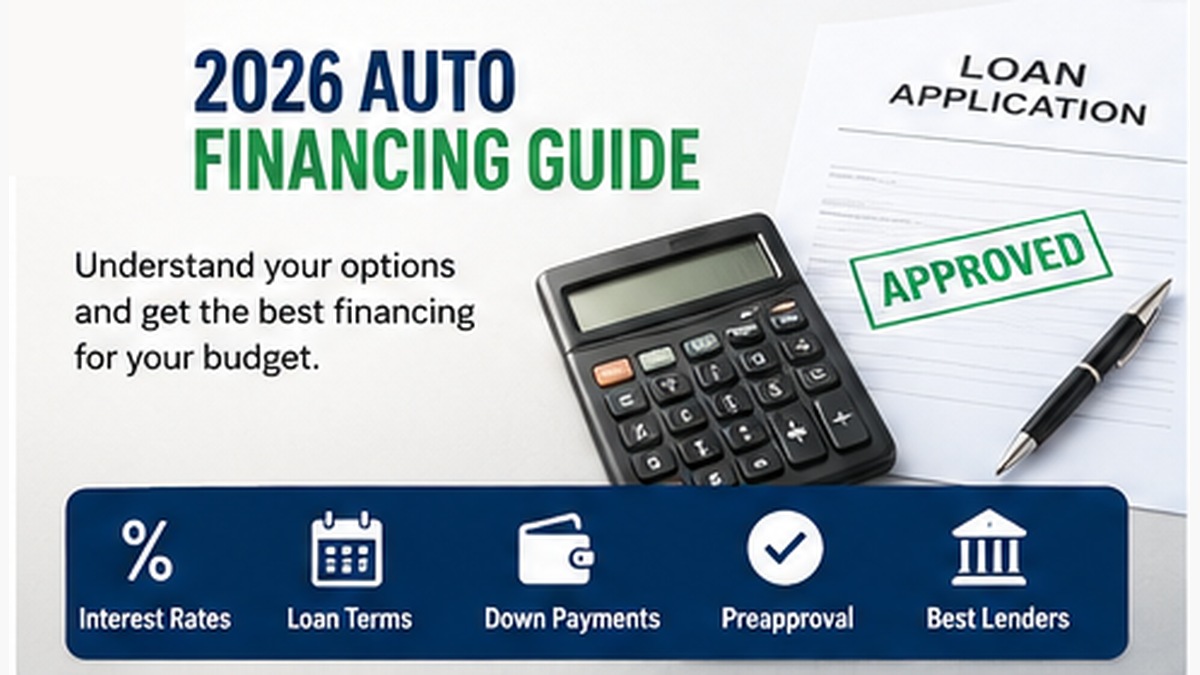
A car loan can make a vehicle affordable to buy today, but the structure of the financing determines how much that convenience costs over time. In 2026, buyers are dealing with high vehicle prices and widespread use of longer loan terms. Understanding the financing before you shop puts you in a much better position to judge a deal.
Edmunds reported that the average financed new-vehicle payment reached $777 in Q2 2026 and that 36.5% of financed new-vehicle buyers used terms of 73 months or longer. That makes loan structure a central part of the buying decision.
Source: Edmunds Q2 2026 financing trends.
What Is an Auto Loan?
An auto loan is money borrowed to purchase a vehicle. You repay the principal plus interest over an agreed term. The vehicle generally serves as collateral, meaning the lender can repossess it if the loan goes into default.
Interest Rate vs. APR
The interest rate is the percentage charged for borrowing. APR is a broader measure of the annual cost of credit and can include certain lender fees. When comparing offers, APR is usually the more useful percentage because it makes financing costs easier to compare.
The Five Numbers That Define a Car Loan
- Amount financed - the amount you borrow.
- APR - the annual cost of credit.
- Term - the number of months you repay.
- Monthly payment - the scheduled payment.
- Total of payments - the sum paid if you make every scheduled payment as agreed.
How Credit Affects Auto Financing
Lenders use credit history as one factor in evaluating risk. A stronger credit profile often qualifies for lower rates, while a buyer with recent late payments or limited history may receive higher APRs or different down-payment requirements.
Check your credit reports before applying. Correcting inaccurate information is easier before you are sitting in a dealership trying to close a purchase.
How the Loan Term Changes the Deal
A longer term divides the balance into more payments, lowering the monthly payment. But the loan usually costs more in total interest, and the vehicle has more time to depreciate while you still owe a large balance.
CFPB recommends comparing the length of the loan along with APR, amount financed and monthly payment. Source: CFPB.
48 vs. 60 vs. 72 vs. 84 Months
A 48-month loan generally produces a higher payment but pays down principal quickly. Sixty months remains a useful middle ground for many buyers. Seventy-two or 84 months can make a more expensive vehicle appear affordable, but the borrower stays in debt longer and may pay substantially more interest.
Read our 72- vs. 84-month car loan comparison for a focused look at long terms.
How a Down Payment Changes Financing
A down payment reduces the amount financed. It can lower the monthly payment and total interest and may improve the loan-to-value ratio. Positive trade equity works similarly because it reduces the amount you need to borrow.
Where to Get an Auto Loan
Banks
Banks may offer competitive loans, especially to existing customers with established relationships.
Credit Unions
Credit unions can be a strong place to compare rates and terms, although membership requirements may apply.
Online Lenders
Online applications can make it easy to compare options, but review lender reputation, fees and privacy practices.
Dealer-Arranged Financing
Dealers can submit your application to lenders and may have access to manufacturer programs. Dealer financing can be convenient, but CFPB encourages buyers to compare it with financing obtained directly from other lenders.
Source: CFPB financing options.
Why Preapproval Is Valuable
A preapproval gives you an estimated loan amount and terms before you shop. It can help establish a vehicle budget and provides an offer the dealership may try to beat.
CFPB specifically recommends getting a preapproved loan quote as a useful starting point. Source: CFPB auto-loan guide.
Rate Shopping and Credit Inquiries
Do not be afraid to compare lenders. CFPB explains that auto-loan inquiries made within a focused rate-shopping window are generally grouped as one inquiry by scoring models. Depending on the model, that period may range from 14 to 45 days.
How to Compare Two Loan Offers
Imagine one lender offers a lower payment because the loan lasts 84 months, while another has a slightly higher payment over 60 months. The 84-month loan is not automatically better. Compare the APR, amount financed and total of payments.
Also compare whether either loan contains financed lender fees, prepayment restrictions or conditions tied to the advertised rate.
Dealer Financing and Manufacturer Incentives
New-car manufacturers sometimes offer promotional APRs or cash incentives. You may need to choose between a low promotional rate and a rebate. Calculate both options instead of assuming the low APR is always better.
How Add-Ons Affect the Loan
If you finance a $2,000 service contract, you are not merely paying $2,000. You may also pay interest on that amount for years. Ask for the cash price of each add-on and its effect on the amount financed.
The FTC explains that add-ons are optional and should not be slipped into a deal without your agreement. Source: FTC add-on guidance.
Understanding Negative Equity
Negative equity means you owe more on the current vehicle than it is worth. If that shortage is added to the next loan, the new vehicle begins with old debt attached. In Q2 2026, Edmunds found that 29.6% of trade-ins toward new-vehicle purchases carried negative equity, with an average shortage of $6,884.
Source: Edmunds.
When Refinancing Can Make Sense
Refinancing may be worth reviewing if your credit improves, market rates fall or your original financing was unusually expensive. Compare the new APR, remaining term, fees and total interest. Extending the loan substantially just to lower the payment can erase some of the benefit.
Auto Financing Checklist
- Check credit reports before applying.
- Set the vehicle budget first.
- Choose a down-payment range.
- Get multiple preapprovals.
- Keep rate shopping within a focused period.
- Compare APR, term, amount financed and total cost.
- Ask the dealer to beat your best outside offer.
- Review manufacturer incentives separately.
- Price add-ons individually.
- Know whether a trade has positive or negative equity.
- Read the Truth in Lending disclosures before signing.
Frequently Asked Questions
What is a good car loan rate in 2026?
There is no single good rate for every borrower. Rates vary by credit profile, lender, vehicle and term. Compare several offers available to you rather than relying on a national average.
Can I negotiate an auto loan rate?
Dealer-arranged financing can be negotiable. Bringing a competing preapproval can strengthen your position.
Is the lowest payment the best loan?
No. A low payment may result from a very long term. Compare the complete financing cost.
Market figures in this guide are snapshots from 2026 and can change. Your actual price, APR, payment, trade value and approval terms will depend on the vehicle, lender, location and credit profile.
Take the Next Step With AllCreditAutos.com
A good car deal is not just about finding a vehicle you like. It is about choosing a car, payment, loan and ownership cost that fit together. AllCreditAutos.com helps shoppers across a wide range of credit profiles connect with participating dealers and explore financing options. Complete our quick application when you are ready to see what may be available in your area. Compare the full terms carefully before signing any contract.