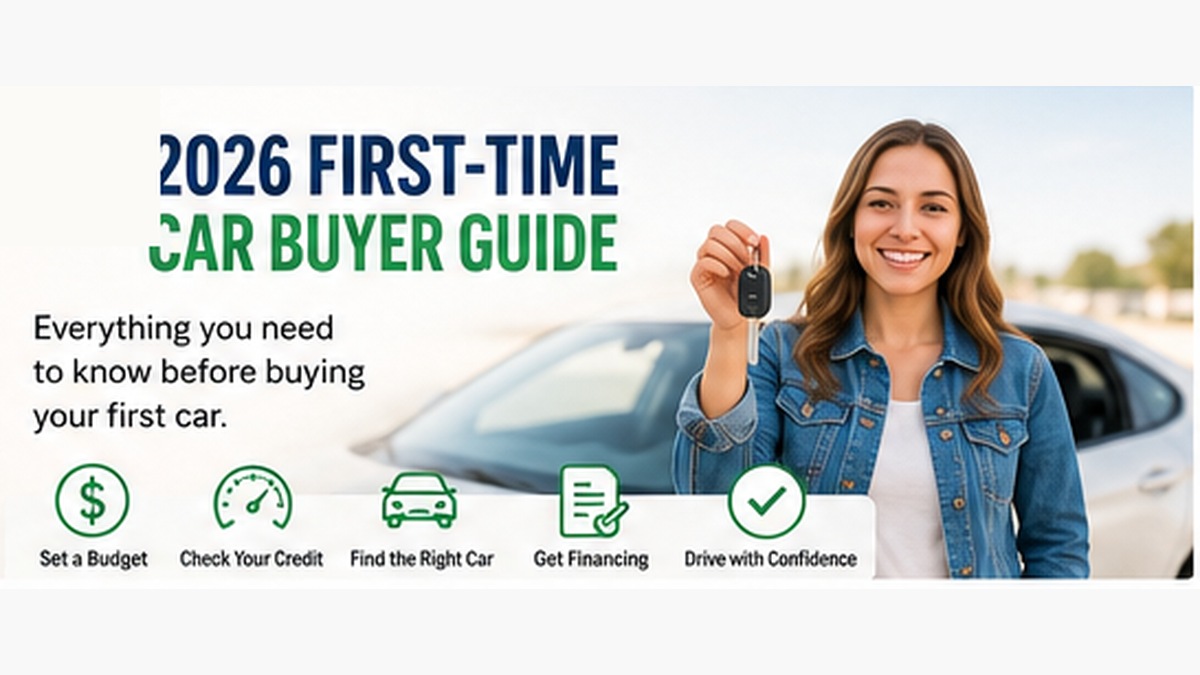
Your first vehicle purchase has more moving parts than the price on the windshield. You are choosing a car, learning how financing works, arranging insurance and signing a contract that may last for years. The best first-time buyers do not know every automotive term in advance - they follow a process that makes the important decisions easier.
Step 1: Decide What You Need the Car to Do
Think about your normal week. How far is your commute? How many passengers do you usually carry? Do you need space for a child seat, sports gear or work equipment? Will you drive in snow? Do you park on a crowded city street?
A first car should solve your transportation needs without adding expensive features you rarely use. Reliability, manageable ownership costs, visibility and easy maintenance often matter more than horsepower or luxury options.
Step 2: Set a Total Car Budget
Do not set your budget based on the monthly payment alone. Estimate insurance before buying, plus fuel, routine maintenance, registration and parking. A vehicle that is cheap to finance may still cost more to own than expected.
Use our How Much Car Can I Afford in 2026? article as a starting point.
Step 3: Learn the Five Loan Numbers
Every first-time buyer should understand these before signing:
- Vehicle price: what you are paying for the car.
- Amount financed: how much you are borrowing after down payment, trade credit and financed fees or products.
- APR: a measure of the annual cost of credit, including certain finance charges.
- Loan term: how long you will make payments.
- Monthly payment: the recurring payment, which should be evaluated with all the numbers above.
CFPB recommends comparing amount financed, APR, term and monthly payment when evaluating auto loans. Source: CFPB.
Step 4: Check Your Credit and Credit History
First-time borrowers sometimes have a thin credit file even if they have never missed a payment. Review your reports before applying. If you have limited history, lenders may place more emphasis on income, down payment, residence stability or a co-signer.
Step 5: Decide Whether You Need a Co-Signer
A co-signer with stronger credit may help some borrowers obtain financing, but the co-signer is taking responsibility for the loan. A late payment can affect both people. Discuss expectations clearly before applying.
Step 6: Save for the Down Payment and First-Month Costs
Your cash needs do not end with the down payment. You may need money for insurance, registration, taxes and initial maintenance. Keep a reserve instead of putting every available dollar into the vehicle.
Step 7: Get Insurance Quotes Early
Insurance can be surprisingly expensive for new and younger drivers. Get quotes on several models before making your final choice. The vehicle's repair cost, safety equipment, theft history and your location can all influence the premium.
Read our cheapest cars to insure in 2026 article for factors to consider.
Step 8: Get Preapproved Before Shopping
A preapproval can help you understand what a lender may offer before you become emotionally attached to a particular vehicle. CFPB notes that buyers are not required to finance through the dealership and may benefit from comparing bank, credit-union and other lender offers.
Source: CFPB dealership financing guidance.
Step 9: Compare New, Used and Certified Pre-Owned
A new car offers full warranty coverage and new technology but usually comes with a higher price. A used car may be less expensive and depreciate more slowly, while a certified pre-owned vehicle can offer additional inspection or warranty benefits. Compare the total cost rather than assuming one category is always best.
Step 10: Research Three to Five Models
Create a shortlist rather than shopping one dream car. Compare reliability history, fuel economy, insurance, safety, cargo room and market pricing. Having alternatives gives you bargaining power and protects you from overpaying because only one specific vehicle will do.
Step 11: Test Drive With a Checklist
Adjust the seat and mirrors. Pair your phone. Try parking. Drive at city and highway speeds if possible. Check blind spots and braking. For used cars, listen for unusual noises and verify that major features work.
Step 12: Get the Out-the-Door Price in Writing
The FTC recommends asking for the out-the-door price before discussing financing. That price should make it easier to see what the vehicle actually costs after taxes and fees and to compare multiple dealers.
Source: FTC.
Step 13: Do Not Negotiate Only by Payment
A salesperson can often lower the monthly payment by extending the term. That does not mean the car became cheaper. Keep the price, APR and term visible throughout the negotiation.
Step 14: Ask About Every Add-On
First-time buyers can be overwhelmed in the finance office. Extended service contracts, GAP products, appearance protection and other add-ons can increase the amount financed. Ask what each product costs, whether it is optional and whether you can buy it later.
Step 15: Read Before You Sign
Verify the vehicle identification number, price, down payment, amount financed, APR, term, payment and add-ons. Never sign a blank or incomplete document. Ask for copies of everything you sign.
First-Time Buyer Mistakes to Avoid
- Shopping before setting a budget
- Ignoring insurance until the day of purchase
- Buying based only on appearance
- Assuming dealer financing is the only option
- Focusing only on the monthly payment
- Skipping a used-car inspection
- Financing add-ons without checking their price
- Using an 84-month loan to afford a car that is otherwise outside the budget
A Simple First-Car Example
Suppose you have $3,000 saved and can afford about $600 a month for all transportation costs. After getting insurance estimates, you expect insurance to cost $170 and fuel plus maintenance to average $130. That leaves roughly $300 for the loan payment. Your shopping budget should be built around that payment - not around a lender saying you qualify for $500 per month.
Frequently Asked Questions
Do I need credit to buy my first car?
You can pay cash without credit. If you finance, lenders generally evaluate your credit history along with other factors. Buyers with limited credit may still have financing options.
Is a new car better for a first-time buyer?
Not necessarily. A new car may offer warranty coverage and predictable condition, while a used car can reduce the purchase price. Compare the full cost and your ability to handle repairs.
How many cars should I test-drive?
There is no required number, but driving several competing models can make your preferences much clearer and reduce the chance of an impulse purchase.
Market figures in this guide are snapshots from 2026 and can change. Your actual price, APR, payment, trade value and approval terms will depend on the vehicle, lender, location and credit profile.
Take the Next Step With AllCreditAutos.com
A good car deal is not just about finding a vehicle you like. It is about choosing a car, payment, loan and ownership cost that fit together. AllCreditAutos.com helps shoppers across a wide range of credit profiles connect with participating dealers and explore financing options. Complete our quick application when you are ready to see what may be available in your area. Compare the full terms carefully before signing any contract.