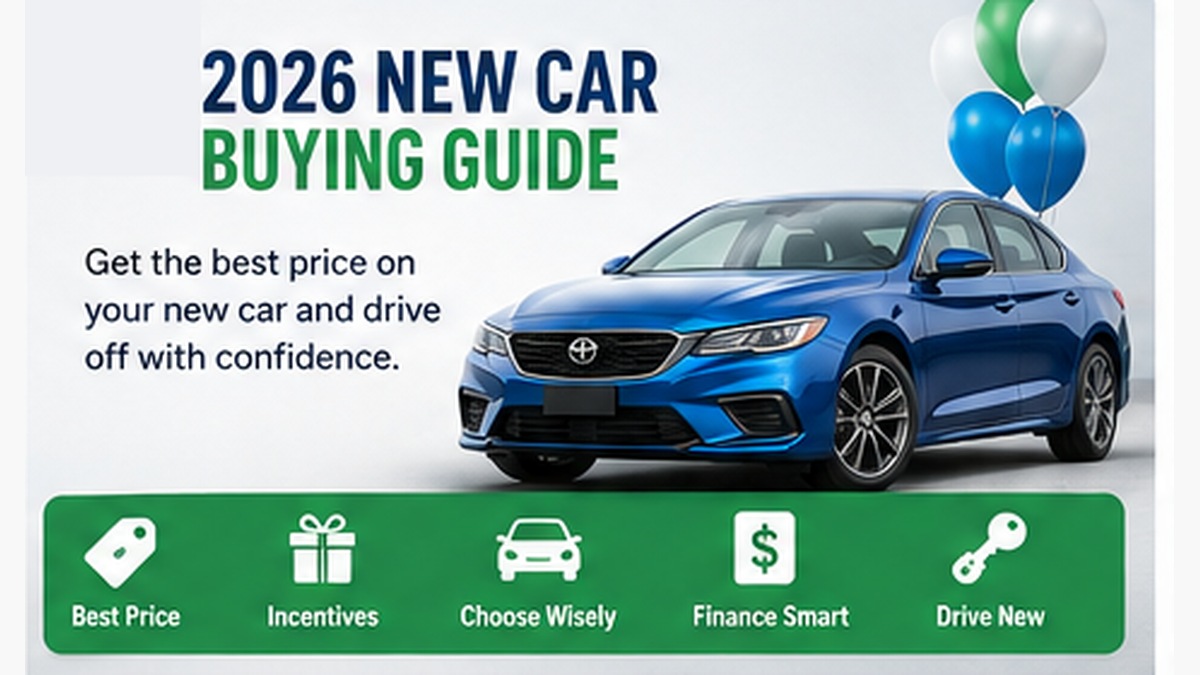
Buying a new car in 2026 gives you access to the latest safety equipment, warranties and technology, but it also means shopping in a market where average prices remain close to $50,000. The goal is not simply to find a discount. It is to choose the right vehicle, compare actual selling prices and structure the financing so the total deal works.
Kelley Blue Book reported that the average new-vehicle transaction price was $49,758 in June 2026. Buyers were also shifting toward more affordable segments such as subcompact SUVs. Source: Kelley Blue Book/Cox Automotive.
1. Start With the Vehicle Class, Not the Brand
Decide whether you truly need a compact car, midsize sedan, small SUV, three-row SUV, pickup or another body style. Choosing the correct class can save more than negotiating a small discount on a vehicle that is larger than you need.
2. Set an Out-the-Door Budget
Your target should include taxes and fees, not just MSRP. If you are financing, also decide on a maximum amount financed and a comfortable loan term. This keeps the conversation from being reduced to a monthly payment.
3. Compare Trim Levels Carefully
The difference between a base trim and a heavily optioned model can be thousands of dollars. Identify the features that truly matter - perhaps adaptive cruise control, heated seats or all-wheel drive - and avoid paying for packages filled with features you do not value.
4. Research Actual Market Pricing
MSRP is a reference point, not always the final selling price. Check current listings from several dealers and compare the same model, trim and major options. Inventory levels and local demand can create meaningful price differences.
5. Understand Manufacturer Incentives
Automakers may offer cash rebates, promotional financing, loyalty incentives, conquest programs or special offers for certain groups. Eligibility varies. Ask the dealership to show which incentives are included in its advertised price.
Sometimes a buyer must choose between a cash rebate and promotional APR. Calculate the total cost of each option using your expected loan amount and term.
6. Ask for the Out-the-Door Price in Writing
The FTC recommends getting an out-the-door price in writing before discussing financing. This allows you to compare dealer offers more accurately and makes unexpected add-ons easier to spot.
Source: FTC.
7. Shop More Than One Dealer
Two dealerships selling the same model can have different inventory, discounting and add-on practices. Email or call several stores with the exact vehicle specifications you want and request a written quote. A competing offer gives you useful leverage.
8. Decide Whether to Order or Buy From Inventory
Buying from inventory may provide more negotiating flexibility when a dealer wants to move a vehicle. Ordering can help you avoid paying for unwanted packages, but pricing and delivery timing may differ. Compare both approaches if your preferred configuration is hard to find.
9. Get Financing Before You Arrive
Even if you expect to use manufacturer financing, get an outside preapproval. CFPB notes that you are not required to obtain the loan through the dealership. An outside offer lets you compare the dealer's final APR and term.
Source: CFPB.
10. Compare the Promotional APR With the Rebate
A 0% or low-rate offer can be attractive, but only qualifying buyers may receive it. If taking the promotional rate means giving up a large rebate, compare the total dollar cost under both structures.
11. Resist Stretching the Loan Just to Reach the Payment
Edmunds reported that 23.9% of financed new-vehicle buyers used 84-month-or-longer loans in Q2 2026. A long term can make a $50,000 vehicle appear more manageable each month while keeping you in debt for seven years or more.
Source: Edmunds.
12. Handle Your Trade-In Separately
Know your current payoff and obtain several trade estimates before visiting the dealer. Negotiate the new vehicle price separately from the trade value so you can judge both parts.
13. Be Especially Careful With Negative Equity
If you owe more than the trade is worth, the shortage may be rolled into the new loan. That increases the amount financed and can create a difficult cycle. Edmunds found that the average negative equity on underwater trade-ins toward new vehicles was $6,884 in Q2 2026.
Source: Edmunds.
14. Review Dealer Add-Ons
Ask for a list and price of every accessory or finance-office product. Dealer-installed accessories, service contracts, GAP products, maintenance plans and appearance protection can significantly increase the final price.
FTC guidance makes clear that add-ons are optional and should be agreed to by the buyer. Source: FTC.
15. Understand the Warranty
Know the basic warranty, powertrain warranty, roadside-assistance coverage and maintenance programs included by the manufacturer. Do not assume an extended service contract is necessary simply because you are offered one.
16. Get an Insurance Quote Before Signing
Insurance premiums can vary significantly between trims and models. A higher-performance engine, expensive lighting system or large wheels may increase repair costs. Quote the exact vehicle before finalizing the purchase.
17. Inspect the New Car Before Delivery
Even a new vehicle should be inspected. Check the paint, wheels, glass, interior and all accessories. Verify that the VIN matches the paperwork and that promised accessories or dealer-installed items are present.
18. Review Every Final Number
Make sure the selling price, incentives, trade allowance, payoff, down payment, amount financed, APR, term and payment match your agreement. Look for products you did not authorize.
New-Car Buying Checklist
- Choose the correct vehicle class.
- Set an out-the-door budget.
- Compare trims and must-have features.
- Check local inventory and market prices.
- Research incentives.
- Request written out-the-door quotes.
- Compare several dealers.
- Get outside financing.
- Compare rebate versus promotional APR.
- Know your trade value and payoff.
- Avoid rolling large negative equity if possible.
- Review add-ons and warranties.
- Quote insurance.
- Inspect the vehicle before delivery.
- Review final paperwork.
Frequently Asked Questions
Is MSRP the price I should pay?
Not necessarily. Actual pricing depends on demand, inventory, incentives and the model. Compare real written offers.
Are new cars too expensive in 2026?
The average transaction price is high, but averages include expensive trucks and luxury vehicles. More affordable segments remain available. Start with your budget rather than the market average.
Should I take the rebate or low APR?
Calculate both. The better choice depends on the rebate amount, promotional rate, outside financing rate, amount borrowed and term.
Market figures in this guide are snapshots from 2026 and can change. Your actual price, APR, payment, trade value and approval terms will depend on the vehicle, lender, location and credit profile.
Take the Next Step With AllCreditAutos.com
A good car deal is not just about finding a vehicle you like. It is about choosing a car, payment, loan and ownership cost that fit together. AllCreditAutos.com helps shoppers across a wide range of credit profiles connect with participating dealers and explore financing options. Complete our quick application when you are ready to see what may be available in your area. Compare the full terms carefully before signing any contract.